FARM &
STUDIO
Jungsgård: The place from which everything grows
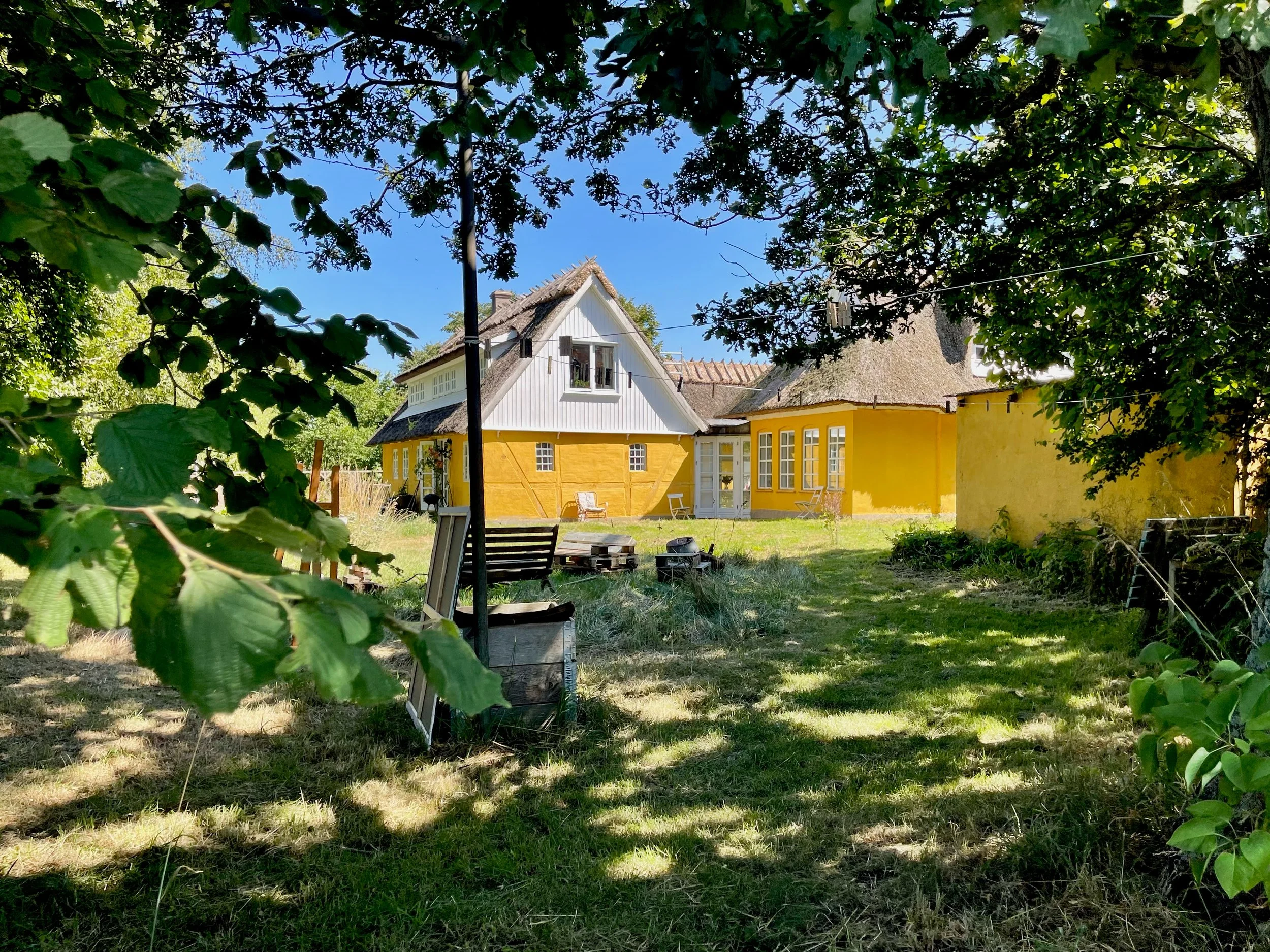
JungsgårdNestled in the rolling landscape of Jungshoved in South Zealand, Denmark, stands the farm that has become both my home and the heart of my creative practice.
Built in 1901, the property was originally established as a working farm. More than a century later, it still carries traces of its past: the sturdy buildings, the mature trees, and the sense of permanence that comes from generations having lived and worked on this land. Surrounded by fields, forests, and the nearby coastline, the farm exists within a landscape where nature remains a constant presence.
My husband and I chose this property for practical reasons. We needed a place that could accommodate both our home and my studio. At the time, finding affordable studio space in Copenhagen had become increasingly difficult, and I was reaching a point in my artistic career where I simply needed more room to work. The farm offered a solution: a place where everyday life and artistic practice could exist side by side.
What began as a practical necessity gradually became something much more meaningful. Over the years, living here has brought a deep sense of joy and belonging. The rhythms of rural life, the changing seasons, and the close proximity to the natural world have become an essential part of how I live and create.
The place has profoundly shaped my work. Nature is not merely a motif but a source of inspiration, reflection, and connection. My paintings, sculptures, and writing are increasingly informed by the cycles of growth, decay, renewal, and transformation that unfold around me every day. Living here has strengthened my belief that humans are not separate from nature but part of a larger, living network of relationships.
Many ideas begin while working in the garden, walking through the landscape, or simply observing the subtle changes that occur from one season to the next. The farm has taught me patience. It has shown me that creativity, much like nature itself, cannot be rushed. It grows in its own time.
Today, this place is far more than a home and a studio. It is the foundation of my artistic practice, a source of daily inspiration, and the place from which everything grows.
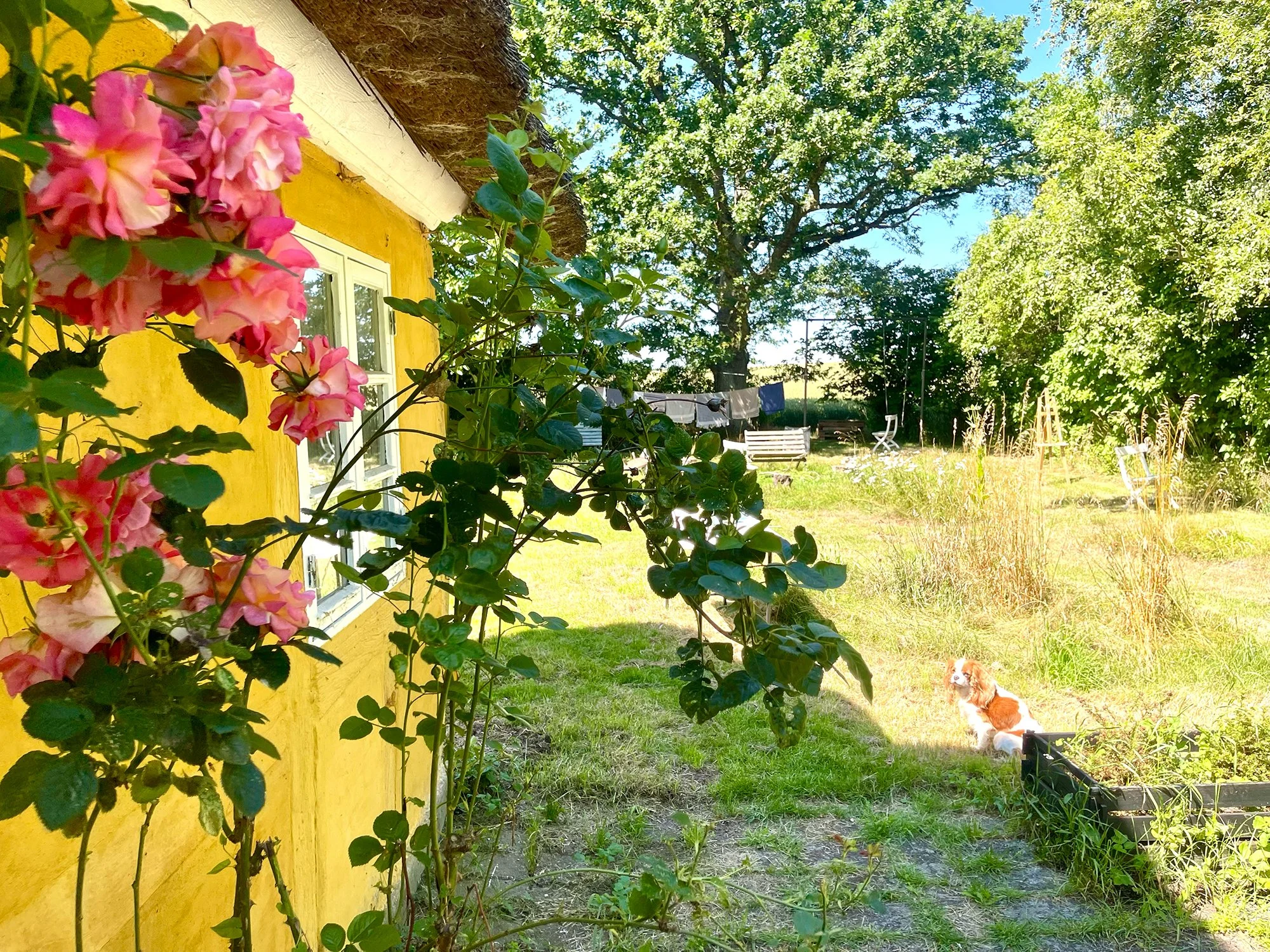
View from studio
The Studio
Most of my paintings begin outdoors. I prefer to work directly in nature, either in my garden or in the surrounding forests and landscapes of Jungshoved. When I paint, I surrender to my senses and allow myself to respond not only to what I see, but also to what I feel, hear, and intuitively perceive. For me, it is essential that painting emerges from this total experience of being present within a place.
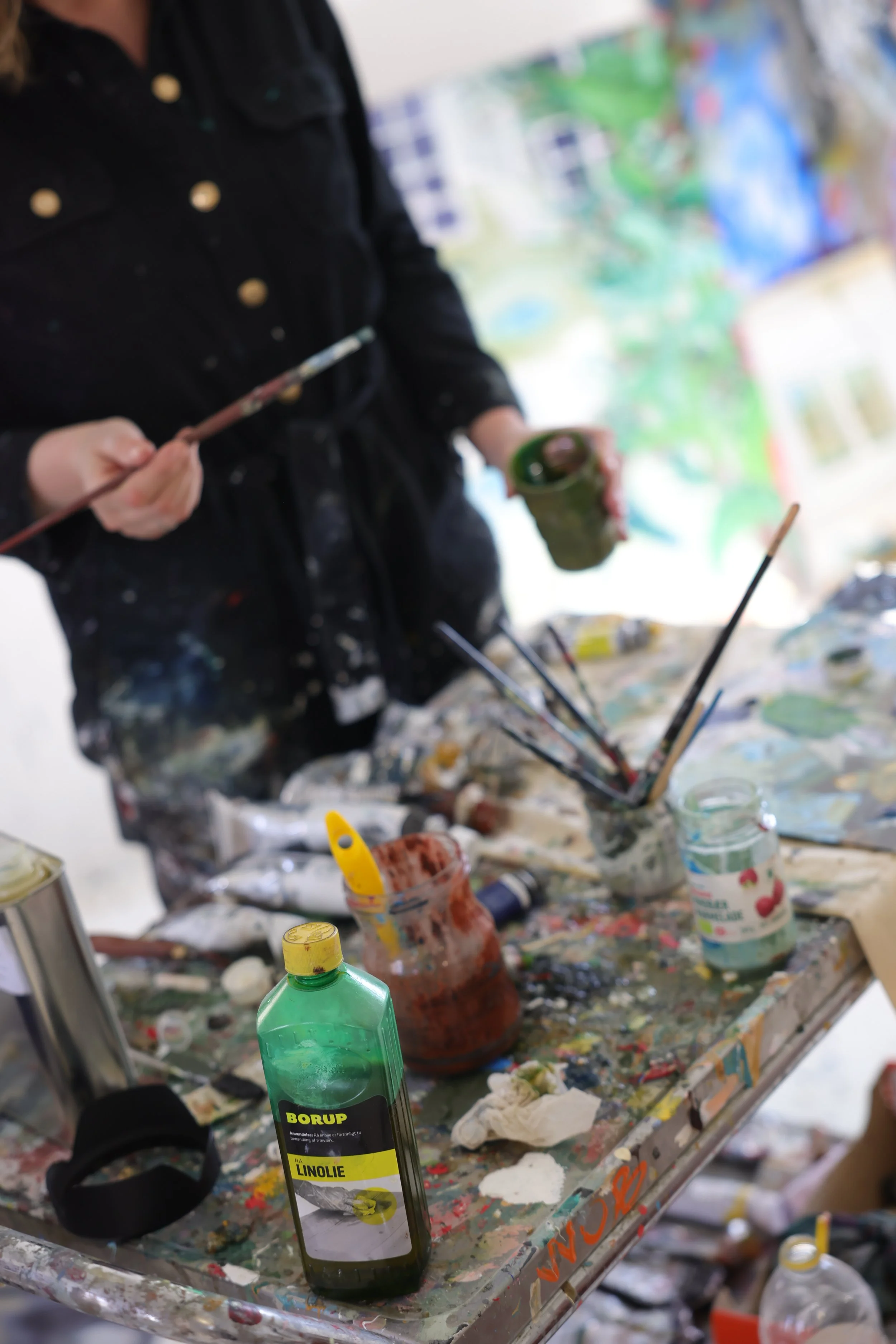
I often paint on cardboard and other reclaimed materials. After a day spent working outside, I return to my studio to complete the paintings, carrying the atmosphere of the landscape with me. Painting is, for me, an extension of being in dialogue with the natural world. It is a form of contact and exchange. I do not work this way solely for my own enjoyment, but because I believe the paintings themselves gain a more direct connection to the living world when they are created in its presence.
In every work, I try to capture the sense of space, depth, and aliveness that I experience in nature. Many of the motifs are recognisable, and local people can often identify the exact places where I have sat to paint or draw. At the same time, I allow myself the freedom to transform colour and atmosphere. Particularly in my paintings, I often shift colours beyond naturalistic observation, giving the work a touch of magical realism and inviting the viewer into a world that exists somewhere between reality and imagination.
My paintings are not attempts to document a landscape. Rather, they are invitations to experience it — to step into a space where observation, sensation, memory, and imagination meet.
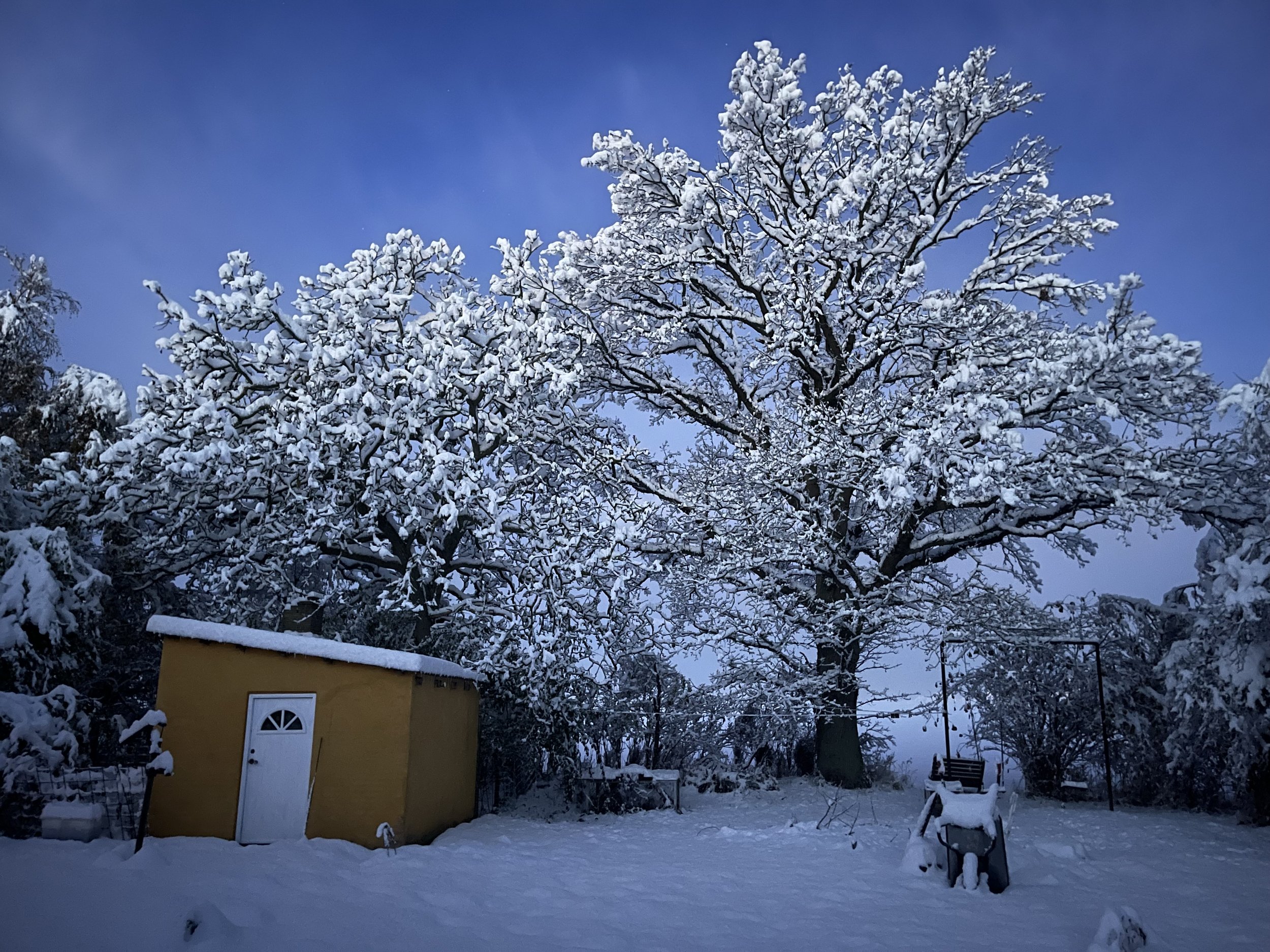
We have all the seasons here
The garden
To me, gardening, painting, writing and drawing are not separate activities but different expressions of the same conversationThe Garden
Jungsgård is surrounded by a large garden that has become an integral part of my daily life and creative practice. While we do not run a farm—the property is far too small for that—we cultivate a substantial vegetable garden. Every day, I wander among the potatoes, lettuces, cabbages, beans, and whatever else happens to be growing at the time.
On days when I cannot make my usual round through the garden and check on the plants, I feel strangely incomplete, as though something essential is missing from my body. The garden has become a way of orienting myself in the world. It grounds me in the seasons, the weather, and the slow transformations that take place beneath the surface of things.
Learning to grow vegetables has been a long process. For years, I made mistakes, lost crops, and struggled to understand the rhythms of cultivation. I am still learning. But gradually, the garden has begun to provide meals that travel directly from soil to table, and there is a quiet satisfaction in participating in that cycle.
I cherish the movement between different forms of making throughout the day: painting, writing, drawing, and tending vegetables. Many people ask whether I become confused by working across so many disciplines and activities. For me, however, they all arise from the same source. Whether I am planting seeds, mixing paint, shaping words, or drawing a line across a page, I am engaged in the same act of attention. Each practice deepens the others, and all of them begin with a desire to participate more fully in the living world around me.